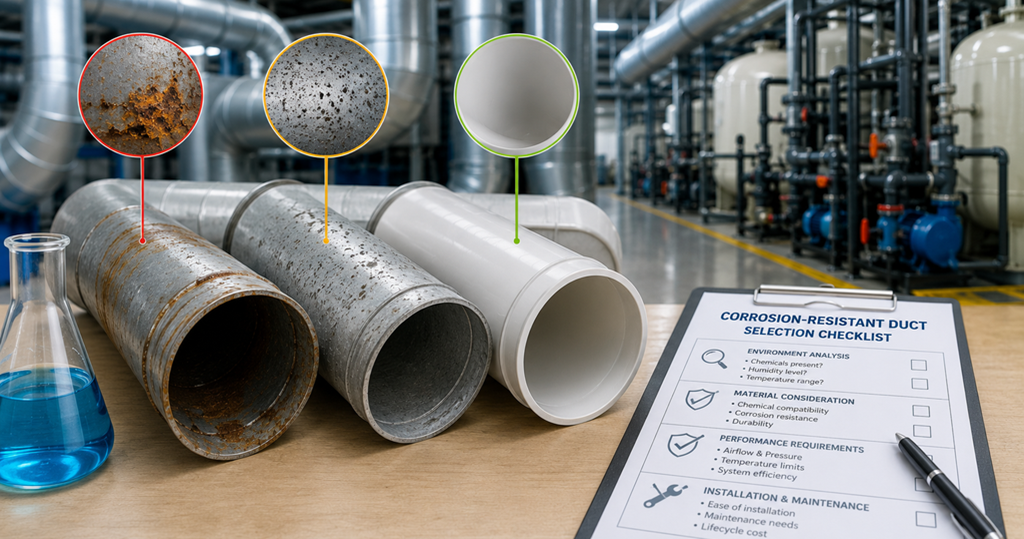
A disciplined selection process removes the guesswork. It comes down to characterizing the stream, checking compatibility at temperature, and confirming the code envelope before a single fitting is welded.
Step 1 — Characterize the exhaust stream
- Constituents and concentrations — list every chemical the duct will see, not just the headline one.
- Temperature — continuous and peak, including cleaning cycles and upset conditions.
- Moisture and condensation — wet, acidic condensate is often more aggressive than the vapor.
- Particulate — abrasive solids change both material and velocity decisions.
Step 2 — Match material to chemistry and temperature
Compatibility is concentration- and temperature-dependent — a chemical PVC handles cold can be aggressive when hot. Check the most aggressive component against published resistance data at your actual temperature.
| CONDITION | TYPICAL MATERIAL |
|---|---|
| Ambient, dilute corrosive air | PVC |
| Hot or concentrated acids / oxidizers | CPVC |
| Very large diameter / high strength | FRP |
For the detailed trade-offs, see PVC vs. CPVC vs. FRP and our guide to PVC temperature limits.
Step 3 — Confirm code and fire requirements
Where the duct is installed can override thermal and chemical ratings. Plenum spaces, cleanrooms, and certain occupancies bring fire-performance standards into play — FM Approvals and NFPA references among them — and they vary by jurisdiction and insurer.
Compatibility follows the worst actor.
A mixed stream is governed by its most aggressive constituent at its highest temperature — never by the average. When in doubt, specify conservatively.
Step 4 — Plan fabrication and support
Joint method, support spacing, and transitions all shift with the material and service conditions. Well-welded joints and correctly spaced hangers are what turn the right material into a long-lived system. Fittings such as 45° elbows, reducers, dampers, and blast gates should match the duct material throughout.
The material decision isn’t “which plastic is best.” It’s which one matches the temperature, chemistry, and code envelope of your application — at the lowest responsible cost.
— PDI Engineering Team